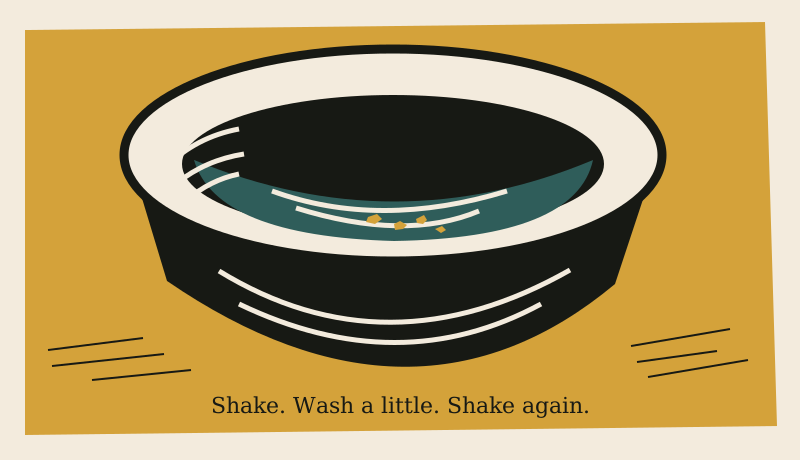
Keep the finish under control
Treat dark concentrate as a second job. Reduce the feed until you can spread it thinly across the pan. Work over a clean catch tray so mistakes stay recoverable. Fine flakes can move suddenly with a surge of water; stop and re-settle rather than chasing them around the rim.
A repeatable finishing sequence
Wet the concentrate, shake gently, then roll a shallow film of water across it. Draw the lighter edge away a little at a time. Collect visible yellow pieces with a snuffer bottle, rinse its contents into a vial and label the sample before beginning another.
Keep the first pass and the tailings separate. Repeat the tailings once at the same small volume. If the second pass contains flakes, your first pass needs a slower wash. That is a technique result, not evidence that the creek is rich.
Black sand is a clue, not a grade
Dense dark minerals can accumulate with gold, but black sand is not proof of gold. A magnet removes some magnetic minerals; it does not identify everything that remains. If you experiment with a covered magnet at home, preserve both fractions and check for trapped flakes. Never discard material just because it followed the magnet.
Deal with clay before the last wash
Clay can hold fine particles. Break it down gently in water before removing stones, then rinse those stones over the pan. Do not grind historic material, cut banks or increase disturbance to feed a bigger cleanup system. The site rules still govern how the sample is taken.
Store an honest result
Keep concentrate damp or securely closed for transport. Label date, source and sample volume. Do not estimate value from an unweighed handful of black sand. A phone photo under consistent light is useful for comparison; it is not an assay.
Try this before the next step.
Finish two equal spoonfuls over separate catch trays. Re-pan both leftovers. Record the motion and loss check, even if neither sample contains gold.
Sources & checks
These sources support the factual background. Exercises and buying checklists are Paystreak editorial suggestions, not reported recoveries, product tests or personal financial advice. Check live rules and notices before acting.